
The waste you cannot see on the invoice
In most Azure environments we audit, the same pattern shows up. Resources that were once useful are still active, still costing money, and sometimes nobody even know they exist. Unattached managed disks, idle public IPs, empty App Service Plans, a forgotten Application Gateway quietly running for a project that wrapped up long ago.
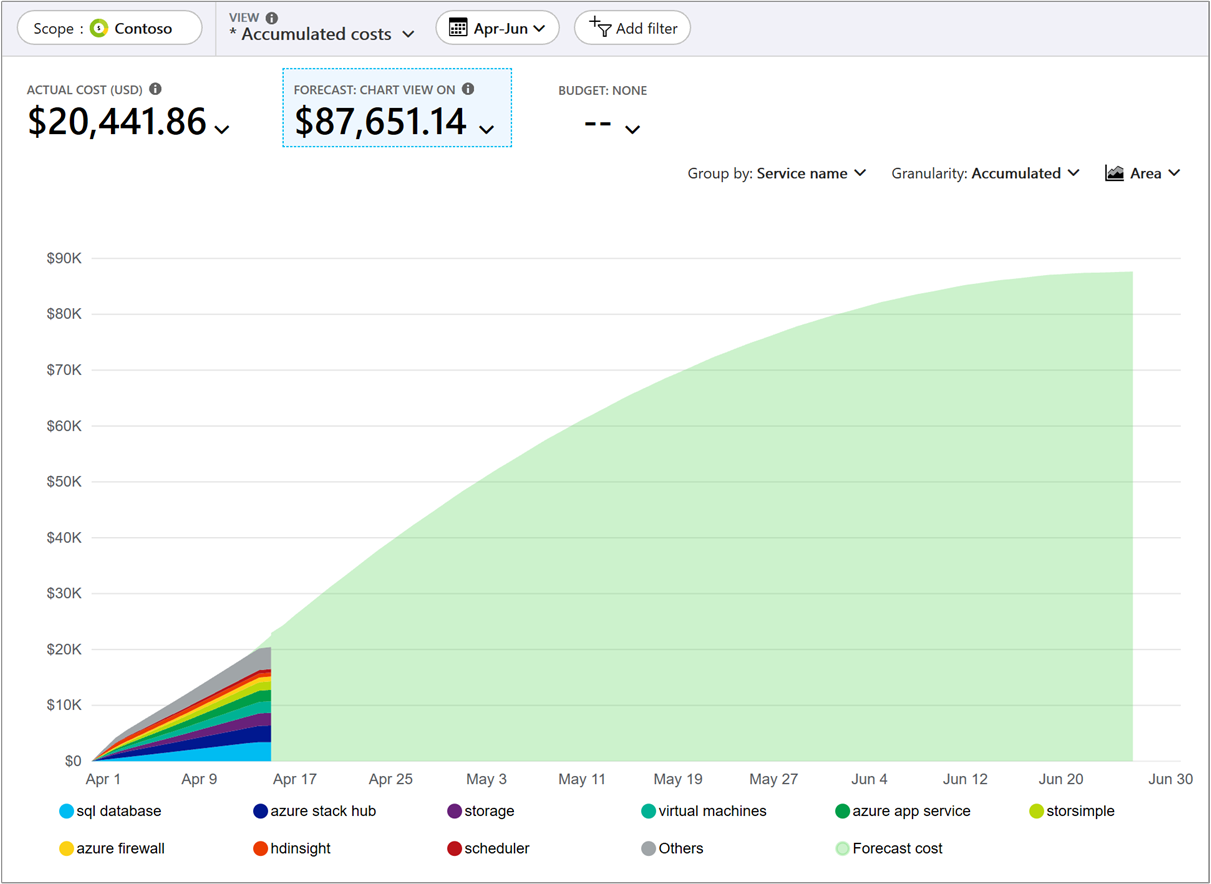
Individually they look insignificant. Across an estate of dozens of subscriptions, they add up to thousands of euros a month, sometimes tens of thousands a year. The bigger the environment, the more it accumulates, and the less visible it becomes.
Microsoft provides great tools, and your cloud provider ensures access, but it’s up to you to keep costs in check.
Why Orphaned Resources Are a Problem
Orphaned resources are assets that are no longer tied to an active workload. Public IPs without a NIC. Disks without a VM. Application Gateways pointing at backend pools that were torn down a year ago. They inflate your bill, clutter your environment, and quietly expand your attack surface.
Two things have made this worse over the past year. Standard SKU public IPs are now billed by default, so every leftover IP from a deleted VM keeps charging you. And GPU SKUs for AI workloads cost ten to fifty times what a standard VM does, so a single forgotten experiment can dwarf the rest of your waste. The Flexera 2026 State of the Cloud Report puts estimated wasted cloud spend on IaaS and PaaS at 29%, up for the first time in five years, and points to AI workloads and new PaaS services as the reason. Orphans are a meaningful slice of that number, and they are the easiest part to fix.
The Hidden Cost of Clutter
The financial impact is real. The Flexera 2026 State of the Cloud Report puts estimated wasted cloud spend on IaaS and PaaS at 29%, up for the first time in five years. Not all of that waste is orphaned resources, oversized VMs and idle reservations make up a big slice too, but orphans are consistently one of the easiest categories to identify and remove. For every company spending any serious amount on Azure, even a modest cleanup translates into real money.
Microsoft’s Tools
Microsoft offers intuitive ways to spot orphaned resources. Dashboards like the Orphaned Resources Workbook scan subscriptions and highlight assets like idle load balancers in minutes. It’s a great start, but it’s not automatic or without risk.
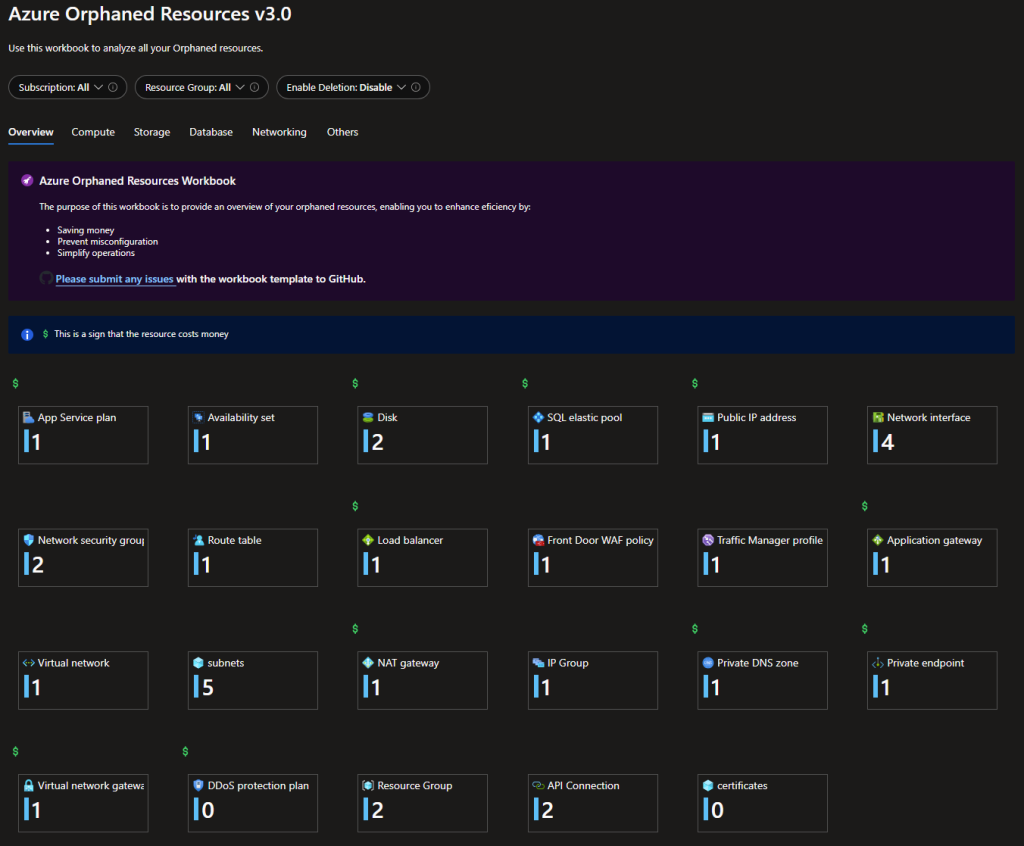
The Orphaned Resources Workbook is updated by the community and supports over 20 categories, spanning compute, storage, databases, networking, and more.
The Orphaned Resources Workbook lets you filter by resource type, region or subscription, making it easier to prioritize what to clean up. But it doesn’t delete anything automatically, and in complex environments, it may miss edge cases - so it should be used as a guide, not a guarantee.
The Strategic Fix: DevOps, IaC, and Microsoft’s Frameworks
Cleaning up orphaned resources is a good step, but preventing them is as always much smarter. DevOps and Infrastructure as Code (IaC) are key. IaC defines resources in code, ensuring they’re tracked and removed when obsolete. DevOps practices, like automated pipelines, enforce rules to shut down test environments or flag unused assets like application gateways before they become orphans. This builds a system where clutter doesn’t take root.
Microsoft’s Well-Architected Framework and Cloud Adoption Framework provide a strategic foundation. They’re more than technical guides and align Azure with your goals through governance, tagging, and regular reviews. These important frameworks ensure resources like NSGs or public IPs serve a purpose, preventing waste. By combining these frameworks with DevOps and IaC, you stop orphaned resources at the source, keeping your Azure environment efficient and cost-effective.
By combining people, process and purpose, supported by DevOps and IaC, you can turn your Azure environment from an unpredictable expense into a streamlined platform aligned with your strategic goals.
There’s no one-size-fits-all approach to the cloud. That’s why we meet you where you are. Contact us today to start your journey with DevOps Masterminds.